Arthritis: Understanding the Different Types, Their Causes, and How You Can Live Better

Arthritis Isn't Just Part of Getting Older
When most people hear the word arthritis, they imagine aching joints and stiff fingers that come naturally with age. While ageing certainly increases the risk, arthritis is not simply an inevitable part of getting older. It is a broad term describing more than 100 different conditions affecting joints, muscles, bones and surrounding connective tissues.
Arthritis can affect people of every age—including children—and, for many, it can become a life-changing condition that impacts work, sleep, mobility, mental health and overall quality of life.
The good news is that while many forms of arthritis cannot yet be cured, modern medicine, healthy lifestyle choices and natural supportive therapies can help many people reduce pain, improve movement and maintain an active, fulfilling life. Understanding arthritis is key to improving quality of life.
Arthritis by the Numbers
Arthritis is one of the world's leading causes of disability.
According to the World Health Organization (WHO):
Approximately 528 million people worldwide were living with osteoarthritis in 2019.
The number of people affected has increased by more than 100% since 1990, largely due to population growth, ageing and increasing obesity.
Arthritis is among the leading causes of disability worldwide and significantly reduces mobility and independence.
Research published in The Lancet Rheumatology estimates that by 2050, nearly one billion people could be living with osteoarthritis if current trends continue.
These statistics remind us that arthritis is far more than "just sore joints"—it is a growing global health challenge.
The Six Most Common Types of Arthritis
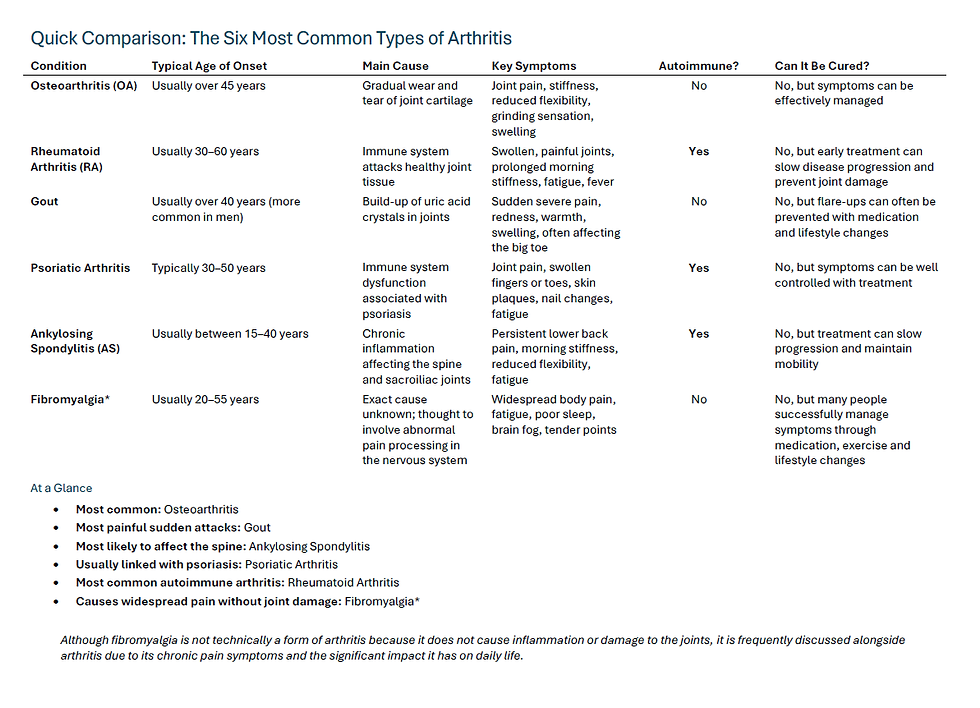
1. Osteoarthritis (OA)
Often called the "wear-and-tear" arthritis, osteoarthritis occurs when the protective cartilage cushioning the ends of bones gradually breaks down.
Common symptoms
Joint pain
Morning stiffness lasting less than 30 minutes
Reduced flexibility
Grinding sensation during movement
Swollen joints
Risk factors
Age
Previous joint injuries
Obesity
Repetitive joint stress
Family history
Treatment options
Medical
Paracetamol
NSAIDs (anti-inflammatory medications)
Corticosteroid injections
Joint replacement surgery in severe cases
Natural support
Omega-3 fatty acids
Turmeric (curcumin)
Ginger
Heat therapy
Topical herbal preparations
Lifestyle
Weight management
Low-impact exercise
Swimming
Walking
Strength training to support affected joints
2. Rheumatoid Arthritis (RA)
Unlike osteoarthritis, rheumatoid arthritis is an autoimmune disease, where the immune system mistakenly attacks healthy joint tissue.
Without treatment, RA can permanently damage joints and may affect the heart, lungs and eyes.
Symptoms
Painful swollen joints
Morning stiffness lasting over an hour
Fatigue
Fever
Loss of appetite
Risk factors
Genetics
Smoking
Hormonal factors
Autoimmune predisposition
Treatment
Medical
Disease-Modifying Anti-Rheumatic Drugs (DMARDs)
Biologic medications
Anti-inflammatory medication
Corticosteroids
Natural support
Anti-inflammatory diet
Fish oil
Stress reduction
Gentle yoga
Adequate sleep
Lifestyle
Regular movement
Physiotherapy
Smoking cessation
Maintaining healthy body weight
3. Gout
Gout develops when excess uric acid forms sharp crystals inside joints, producing sudden attacks of severe pain.
The big toe is commonly affected, but ankles, knees, wrists and fingers may also become inflamed.
Symptoms
Sudden severe pain
Redness
Warm swollen joints
Tenderness
Difficulty walking during flare-ups
Risk factors
High-purine diet
Alcohol
Kidney disease
Obesity
Family history
Treatment
Medical
Colchicine
NSAIDs
Corticosteroids
Uric acid-lowering medication
Natural support
Drinking plenty of water
Tart cherry extract
Vitamin C
Limiting alcohol
Lifestyle
Weight management
Reduce sugary drinks
Limit organ meats and processed foods
Regular exercise
4. Psoriatic Arthritis
Some people living with psoriasis also develop inflammation in their joints.
This condition varies greatly from person to person and may affect fingers, toes, spine or large joints.
Symptoms
Joint pain
Swollen fingers or toes
Fatigue
Skin plaques
Nail changes
Risk factors
Psoriasis
Family history
Immune dysfunction
Treatment
Medical
DMARDs
Biologics
NSAIDs
Natural support
Vitamin D (if deficient)
Omega-3 fatty acids
Stress management
Moisturising skin care
Lifestyle
Regular exercise
Healthy weight
Good sleep
Avoid smoking
5. Ankylosing Spondylitis
This inflammatory arthritis mainly affects the spine and sacroiliac joints.
Over time, inflammation may cause sections of the spine to fuse, limiting movement.
Symptoms
Chronic lower back pain
Morning stiffness
Pain improving with movement
Reduced flexibility
Fatigue
Risk factors
Genetics (particularly HLA-B27)
Family history
Young adulthood
Treatment
Medical
NSAIDs
Biologic therapies
Physical therapy
Natural support
Stretching
Hydrotherapy
Heat therapy
Anti-inflammatory diet
Lifestyle
Daily mobility exercises
Good posture
Core strengthening
Avoid prolonged sitting
6. Fibromyalgia (A Related Chronic Pain Condition)
Although fibromyalgia is not technically arthritis because it doesn't damage joints, it is often grouped with arthritis-related conditions because many people experience widespread musculoskeletal pain.
Symptoms
Widespread body pain
Fatigue
Brain fog
Sleep disturbances
Tender points
Risk factors
Women are affected more often
Family history
Trauma
Chronic stress
Treatment
Medical
Certain antidepressants
Anti-seizure medications
Pain management programs
Natural support
Magnesium
Mindfulness
Massage
Gentle stretching
Lifestyle
Regular low-impact exercise
Good sleep hygiene
Stress reduction
Balanced nutrition
Diet and Exercise: Powerful Tools for Managing Arthritis
No single diet can cure arthritis, but research consistently shows that healthy eating can reduce inflammation and support joint health.
Many experts recommend a Mediterranean-style eating pattern rich in:
Colourful fruits and vegetables
Olive oil
Fatty fish
Whole grains
Nuts and seeds
Legumes
At the same time, reducing highly processed foods, excessive sugar, refined carbohydrates and unhealthy fats may help lower chronic inflammation.
Exercise may seem difficult when joints are painful, but regular movement is one of the most effective ways to preserve flexibility, strengthen muscles that support joints and reduce stiffness.
Good options include:
Walking
Swimming
Cycling
Water aerobics
Yoga
Tai Chi
Resistance training under professional guidance
Always consult your healthcare provider before starting a new exercise program, especially if your arthritis is severe.
Looking After Your Joints Starts Today
Whether you have arthritis or simply want to protect your joints as you age, small daily habits can make a meaningful difference.
✔ Stay physically active with exercises suited to your ability.
✔ Maintain a healthy weight to reduce stress on your joints.
✔ Eat a balanced diet rich in colourful vegetables, fruits, whole grains and healthy fats.
✔ Prioritize quality sleep, as your body repairs itself during rest.
✔ Manage stress, which can contribute to inflammation and increase your perception of pain.
✔ Don't ignore persistent joint pain—early diagnosis and treatment can help prevent long-term damage.
Your joints carry you through every chapter of life. Looking after them today is an investment in your mobility, independence and wellbeing for years to come.
Could It Be Arthritis? A Simple Self-Check Quiz
Joint pain isn't always caused by arthritis, but if you've been experiencing ongoing discomfort, this quick self-check may help you decide whether it's time to speak to your healthcare provider.
Answer each question with "Yes" or "No".
1. Have you experienced joint pain for more than six weeks?
☐ Yes ☐ No
2. Are your joints stiff when you wake up in the morning?
☐ Yes ☐ No
3. Does the stiffness last longer than 30 minutes?
☐ Yes ☐ No
4. Do your joints become swollen, warm or tender?
☐ Yes ☐ No
5. Do everyday activities such as climbing stairs, opening jars, walking or getting out of a chair feel more difficult than they used to?
☐ Yes ☐ No
6. Have you noticed pain that gets worse after periods of inactivity or improves once you start moving?
☐ Yes ☐ No
7. Do you have a family history of arthritis or autoimmune diseases?
☐ Yes ☐ No
8. Have you experienced unexplained fatigue together with joint pain?
☐ Yes ☐ No
9. Have you ever had a sudden attack of intense pain, redness and swelling in one joint, especially your big toe?
☐ Yes ☐ No
10. Have your symptoms affected your sleep, work or quality of life?
☐ Yes ☐ No
What Do Your Answers Mean?
0–2 "Yes" answers
Your symptoms may be related to overuse, a minor injury or another temporary condition. Continue to monitor your symptoms and maintain a healthy, active lifestyle. If pain persists or worsens, consult your healthcare provider.
3–5 "Yes" answers
There may be signs that warrant a professional assessment. Early diagnosis is important because many forms of arthritis respond best when treated promptly.
6 or more "Yes" answers
Your symptoms may suggest an underlying joint or inflammatory condition that deserves medical attention. Booking an appointment with your healthcare provider can help identify the cause and start appropriate treatment as early as possible.
Remember: This quiz is designed for educational purposes only. It cannot diagnose arthritis or replace professional medical advice. If you experience severe pain, sudden swelling, fever, or rapid loss of joint function, seek medical attention promptly.
Conclusion: Living Well with Arthritis
A diagnosis of arthritis does not mean your active life is over.
Today's treatment options are more advanced than ever, and when medical care is combined with good nutrition, regular movement, stress management and appropriate natural support, many people continue to live active, productive and fulfilling lives.
Healthy lifestyle choices, consistent movement, quality nutrition and carefully selected topical natural products may all play valuable roles in helping you stay comfortable and maintain your quality of life.
Every journey with arthritis is unique, but one message remains true: pain does not have to define your future. With the right support and a proactive approach, many people can continue doing the things they love for years to come.
At EcoGen4Life believe that living well with arthritis is about supporting your body naturally while working alongside the guidance of your healthcare professional. Our mission is to help people move more comfortably, stay active, and enjoy life—because every step matters.
Learn More
World Health Organization. Osteoarthritis Fact Sheet: https://www.who.int/news-room/fact-sheets/detail/osteoarthritis
The Lancet Rheumatology. Global burden and future projections of osteoarthritis.
Arthritis Foundation. https://www.arthritis.org
The Arthritis Survival Guide


Comments